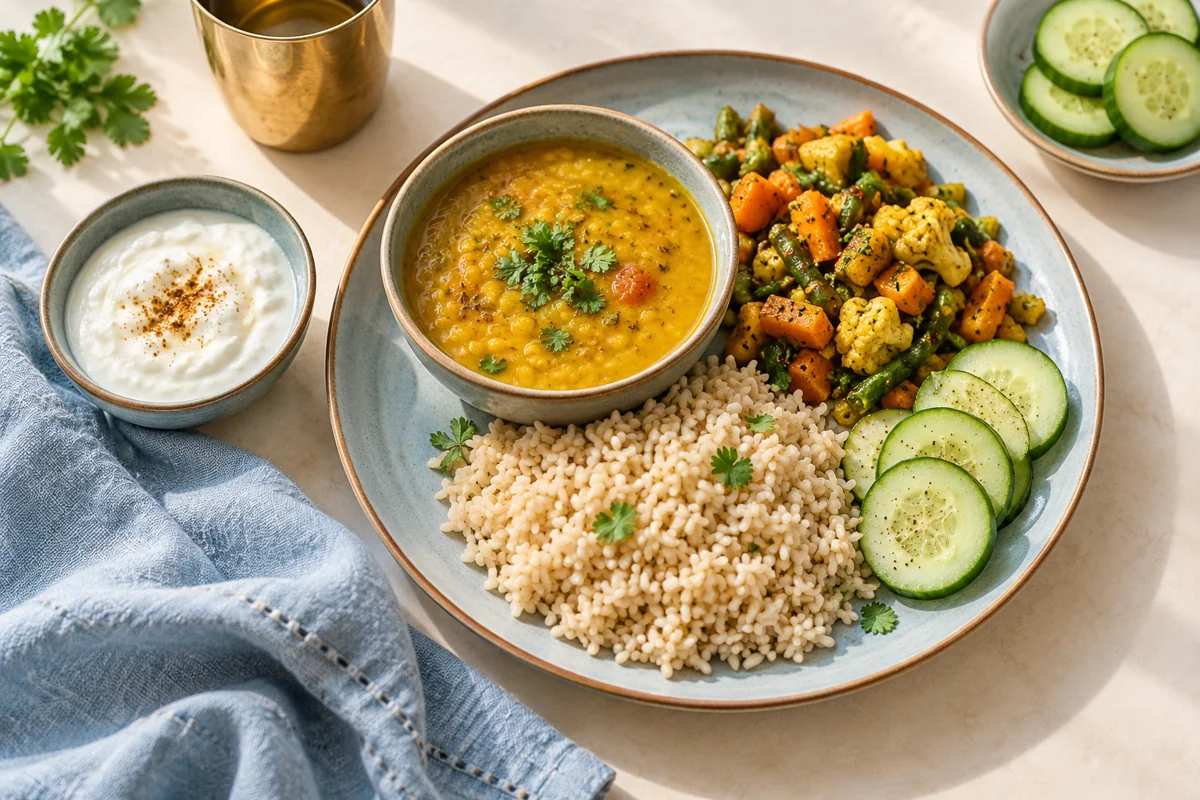
Food choices sit within real lives: work, budgets, family preferences, and access to ingredients. An everyday approach can begin with variety rather than a complete kitchen overhaul.
Make room for variety
WHO describes a healthy diet as including a variety of foods such as vegetables, fruit, pulses, whole grains, and suitable protein sources. No single ingredient needs to carry the whole meal.
Work with familiar meals
As a practical starting point, look at a meal you already enjoy. Could you add a vegetable side, rotate the pulses you cook, or try a whole-grain option that fits your preferences?
Look beyond one meal
Think about your usual eating pattern rather than judging an isolated lunch. WHO recommends limiting free sugars and salt. Reading packaged-food labels can help you compare options.
Leave room for individual needs
Food needs differ. If you have a medical condition, food allergy, or prescribed eating plan, discuss changes with a qualified professional instead of following a generic diet.
Further reading
Original educational content prepared with AI assistance. Images are AI-generated. This article is general information, not a diagnosis or an individual treatment plan. Ask a qualified healthcare professional about your own care.
Discuss your next step